Six casino poker games ranked by how much the house keeps
Six table games that look like poker, ranked from lowest to highest house edge, and why none of them play like the game you know from home.
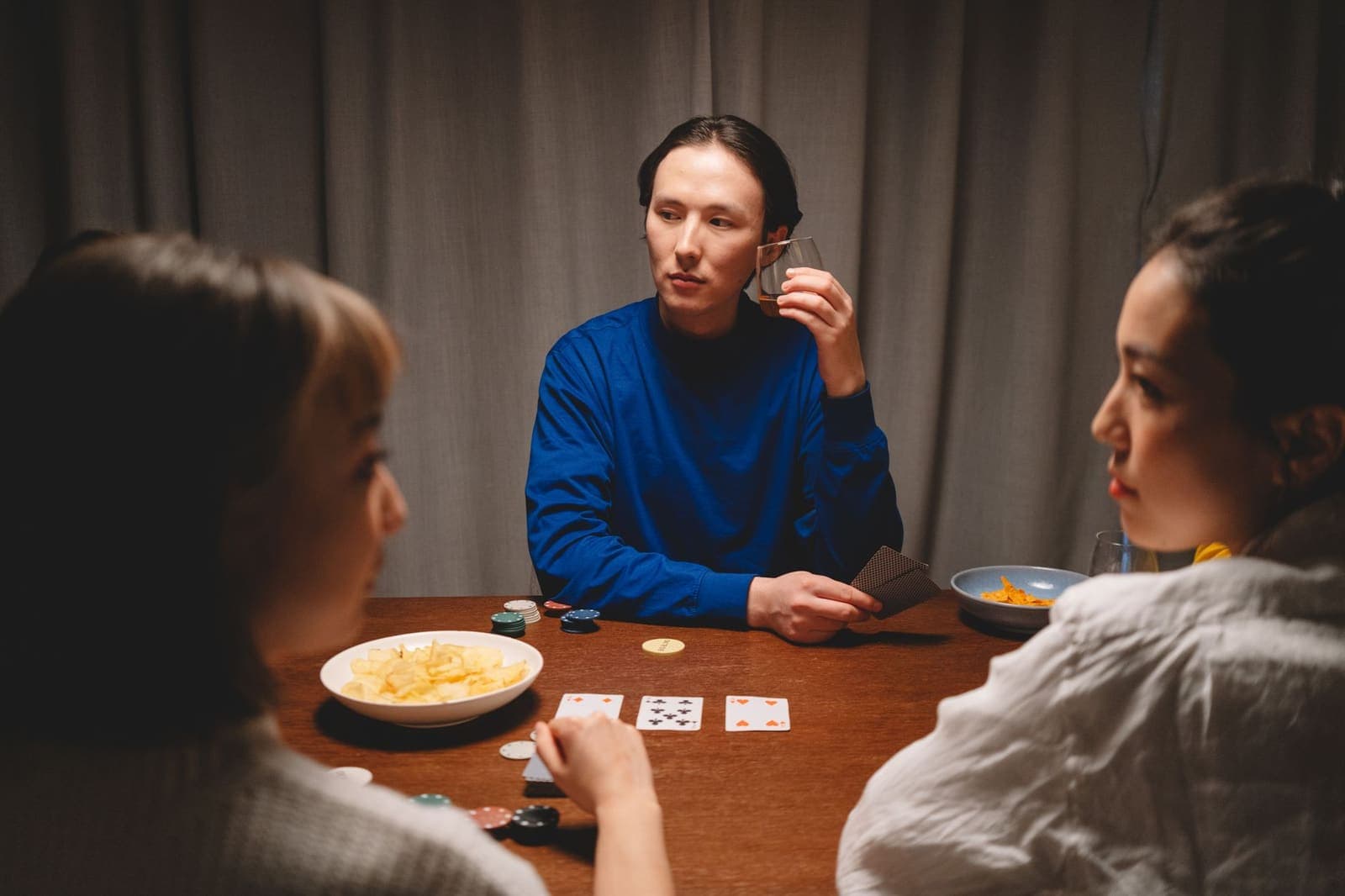
Walk onto any casino floor and you will see tables with names that sound familiar: Ultimate Texas Hold'em, Three Card Poker, Caribbean Stud. They use playing cards, chips and a dealer, so it is easy to assume they work like the poker played at home. They do not. Each is a house game, where you play against the dealer and a fixed pay table rather than against other players. If you need a refresher on which hand beats which, the poker hand rankings guide covers the basics.
This list ranks six of these games by house edge, the built-in mathematical advantage the casino keeps over a large number of bets. The figures are the commonly cited returns for the main bet with the best available strategy, as found in widely used published analysis. Side bets, which are often less favourable, are left out, so treat the order as a guide rather than a precise league table. Pay tables differ between casinos, so the same game can carry a different edge in another room.
- Ultimate Texas Hold'em: around 2.2 per cent on the main bet with the best strategy
- Pai Gow Poker: around 2.5 per cent in the banked game
- Three Card Poker: around 3.4 per cent on the ante and play bet
- Let It Ride: around 3.5 per cent with the best strategy
- Caribbean Stud Poker: around 5.2 per cent on the main bet
- Mississippi Stud: generally higher than the other five on the pay tables most often published
What the figures mean for players
A house edge of 2.2 per cent means that, over a very large number of bets, the casino expects to keep about 2.2 per cent of the total staked. It says nothing about a single evening, which can go either way within minutes. The number is an average across a very large number of hands, not a promise about any one visit.
Strategy charts reduce the edge to the figures above, which is why they are published, but they do not remove it. No betting pattern, progression or hunch changes the mathematics of a fixed pay table. The house edge table on this site lets you compare figures for the games you are considering, and the responsible gambling page lists support services if play stops being fun. Set a budget and a time limit before sitting down.
- 1
Ultimate Texas Hold'em
Ultimate Texas Hold'em borrows the rhythm of Texas Hold'em, with two cards for the player and five community cards, but the player is betting against the dealer rather than other players. The player places an ante and a blind, then decides at set points whether to bet more after seeing the community cards. Among the six, it has the lowest commonly cited main-bet edge, at around 2.2 per cent with the best strategy, which is why it often comes first in comparisons. The difference from real poker is that there are no opponents to bluff, and the payouts follow a fixed table.
- 2
Pai Gow Poker
Pai Gow Poker was developed in the United States in the 1980s and uses a 53-card deck that includes a joker. Each player receives seven cards, which must be arranged into a five-card hand and a two-card hand, with the two-card hand ranked lower. In the banked game the casino or a player can act as banker, and the commonly cited edge is around 2.5 per cent. Unlike real poker, there are no rounds of betting, and the outcome depends on how the player sets the cards.
- 3
Three Card Poker
Three Card Poker was devised in the 1990s and is played with three cards each for the player and the dealer. The most common ranking places a three of a kind above a straight, which reverses the order used in real poker. The ante and play bet carries a commonly cited edge of around 3.4 per cent, while the side bets are separate calculations with their own figures. The familiar hand names therefore do not carry the same meaning at this table.
- 4
Let It Ride
Let It Ride uses three equal bets placed before the cards are dealt, and the player can take back one of them at two points during the hand. The decisions are about withdrawing bets rather than raising against an opponent, which is the central skill in real poker. The commonly cited edge with the best play is around 3.5 per cent. Its pace is slower than many table games, and the house edge stays in place whatever the player chooses to withdraw.
- 5
Caribbean Stud Poker
Caribbean Stud Poker gives each player five cards, with one of the dealer's cards face up. The player decides whether to raise after seeing the hand, and the dealer must hold at least an ace and king to qualify. The commonly cited edge on the main bet is around 5.2 per cent, and the progressive jackpot side bet is a separate calculation with its own edge. In real poker, a raise is a decision made against other players, but here it is made against a fixed set of rules.
- 6
Mississippi Stud
Mississippi Stud is a stud-style game in which the player bets in stages as cards are revealed. The pay table rewards the final five-card hand, and the house edge varies widely between versions of that table. On the pay tables most often published, the figures are generally higher than for the other five games here, so check the house edge table before comparing versions. Unlike real poker, there is no pot shared with opponents, and wins are paid by a fixed chart.
The takeaway
Real poker is a contest between players, and skill in reading opponents shapes the result. These six games are built differently: the pay table is fixed, the dealer follows set rules, and the casino is always in the game. They can be entertaining, with simple rules and quick rounds, but the design gives the house the advantage over time. For plain-English definitions of terms such as house edge and side bet, see the casino glossary.
Frequently asked questions
Is Ultimate Texas Hold'em the same as Texas Hold'em?
No. In Ultimate Texas Hold'em you play against the dealer and a fixed pay table, not against other players. Reading opponents and bluffing do not decide the outcome in the way they do in the home game.
Can a strategy beat the house edge in these games?
No. Optimal strategy lowers the house edge to the figures quoted, but it leaves the edge in place. Over time the casino keeps a share of the money wagered.
Where can I check house edge figures?
Independent analysts publish house edge tables, and this site includes a house edge table in its tools section. Figures depend on the pay table, so check the rules of the exact version you are looking at.
Sources: Wizard of Odds, Nevada Gaming Control Board, UK Gambling Commission, checked and rewritten by the Casino Courant desk. Spotted an error? Tell us.
Casino Courant is independent and does not offer gambling. We do not take payment for editorial coverage. 18+. Gamble responsibly.