How to play roulette: bets, payouts and odds explained
A plain-language guide to roulette's wheel, bets and odds, including why European and American tables carry different house edges.
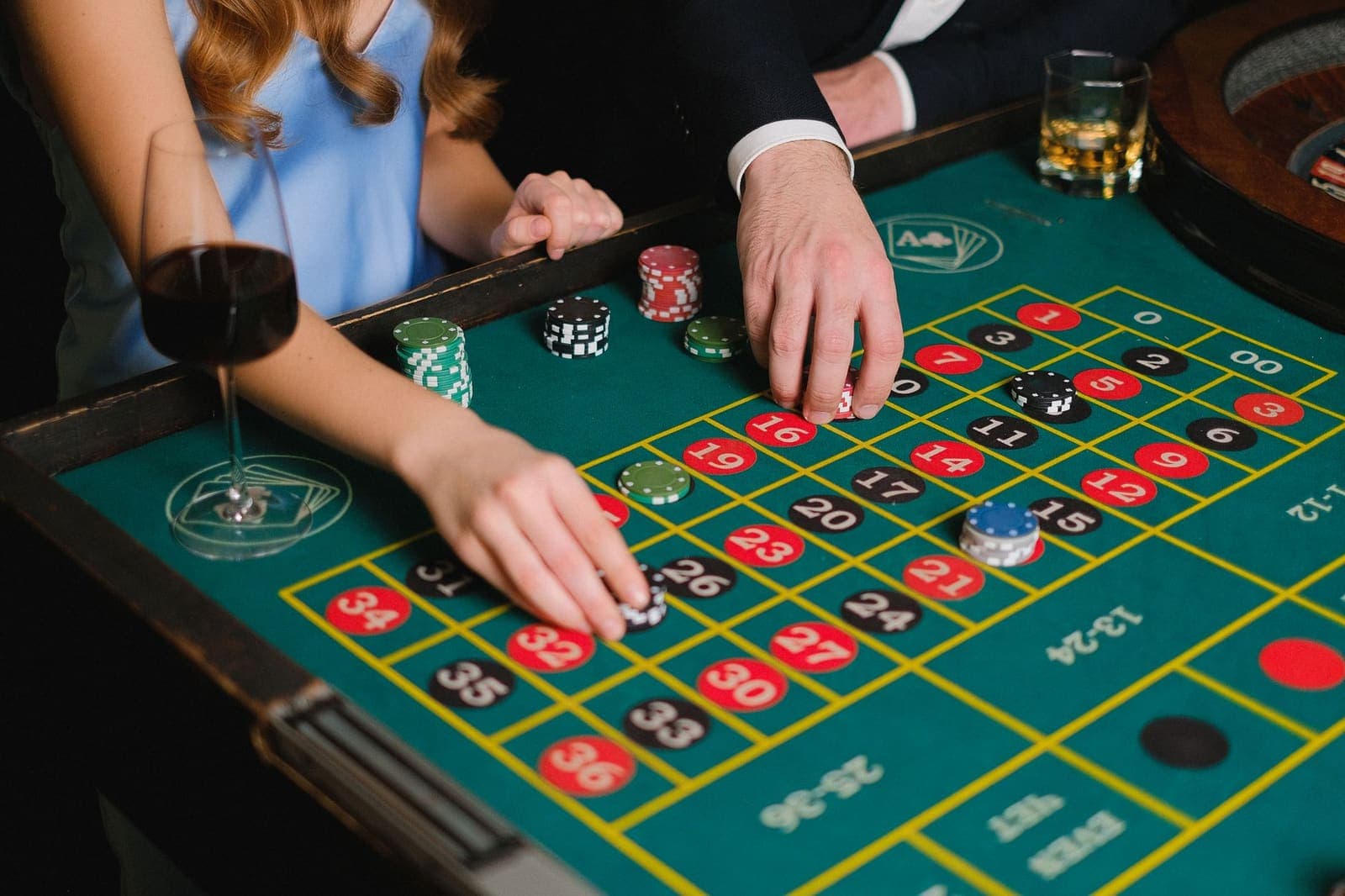
Roulette is played on a wheel with numbered pockets and a matching betting layout on the table. Players predict where a spinning ball will land, choosing from inside bets on specific numbers or outside bets on broader categories such as colour or odd and even. Payouts differ because the odds of winning differ, and a built-in zero pocket (or pockets) gives the casino its edge no matter which bet is placed.
How a round of roulette works
A dealer, known as a croupier, spins the wheel in one direction and releases a small ball in the opposite direction around its rim. Players place chips on the betting layout before the croupier calls 'no more bets', after which the ball eventually drops into one of the numbered pockets. Winning bets are paid out according to fixed odds, and all other chips are collected.
European versus American wheels: the key difference
The European wheel has 37 pockets, numbered 0 to 36. The American wheel adds a second zero, labelled 00, bringing the total to 38 pockets. That extra pocket does not change any payout, but it does lower the odds of winning any given bet, which is why American roulette carries a higher house edge, around 5.26 percent, compared with about 2.70 percent on a European wheel. Which version is on offer depends on the venue: European wheels are standard across most of the world, while American double-zero wheels remain common in the United States.
Inside bets and their payouts
Inside bets are placed directly on numbers within the grid. They cover fewer outcomes, so they pay more when they win.
- Straight up: a single number, pays 35 to 1
- Split: two adjacent numbers, pays 17 to 1
- Street: three numbers in a row, pays 11 to 1
- Corner: four numbers meeting at a point, pays 8 to 1
- Six line: two adjoining rows of three numbers, pays 5 to 1
Outside bets and their payouts
Outside bets cover larger groups of numbers, so they win more often but pay less.
- Red or black: covers 18 numbers, pays 1 to 1
- Odd or even: covers 18 numbers, pays 1 to 1
- Low (1 to 18) or high (19 to 36): covers 18 numbers, pays 1 to 1
- Dozens (1-12, 13-24 or 25-36): covers 12 numbers, pays 2 to 1
- Columns: covers 12 numbers, pays 2 to 1
Why the house always has an edge
Payouts in roulette are set as if the zero did not exist. On a European wheel there are 37 possible outcomes, but a single number bet pays as though there were only 36, which is where the house edge comes from. The same principle, applied to a wheel with 38 pockets, produces the higher edge on American tables. This is often summarised by return to player, or RTP: the theoretical percentage of all wagers a game returns to players over the long run. Roulette's RTP sits close to 97.30 percent on European wheels and 94.74 percent on American ones, figures you can compare against other games using a house edge table.
Some European tables apply extra rules that soften the edge further on even-money bets such as red/black or odd/even. Under 'la partage', if the ball lands on zero, half of any losing even-money bet is returned to the player. Under 'en prison', that bet is instead held over for the next spin rather than lost outright. Where offered, either rule can lower the house edge on those specific bets to roughly 1.35 percent, though availability varies by casino and jurisdiction.
Common myths: streaks and the gambler's fallacy
Each spin of a roulette wheel is an independent event with no memory of previous results. A run of reds does not make black more likely on the next spin, and a number that has not appeared for a while is not 'due'. Belief otherwise is known as the gambler's fallacy, and it underlies many betting systems that claim to beat the game by varying stake sizes. No staking pattern changes the underlying odds or the house edge built into the payout table.
Roulette appears in many forms beyond the classic casino floor table, including live dealer streams and digital versions found at online and sweepstakes casinos, where RTP figures are sometimes published game by game. Whatever the format, the core mechanics, the wheel, the zero and the fixed payout table, remain the same. Readers wanting background on other table games can see how the odds compare in a guide to baccarat or craps. Anyone concerned about their own play, or that of someone close to them, can find support services via the responsible gambling page.
Frequently asked questions
What is the house edge in roulette?
The house edge is the mathematical advantage built into the payout table. It is about 2.70 percent on a European single-zero wheel and about 5.26 percent on an American double-zero wheel.
What's the difference between European and American roulette?
European wheels have 37 pockets, numbered 0 to 36. American wheels add a second zero pocket, 00, for 38 pockets in total, which lowers the odds of winning without changing the payouts, raising the house edge.
Can a betting system improve your odds at roulette?
No. Staking systems change how quickly you might win or lose money but do not alter the fixed odds of each bet or the house edge built into the wheel.
Is roulette a game of skill or chance?
Roulette is a game of pure chance. The outcome of each spin is independent and cannot be predicted or influenced by the player, unlike skill-based games such as blackjack.
Casino Courant is independent and does not offer gambling. We do not take payment for editorial coverage. 18+. Gamble responsibly.