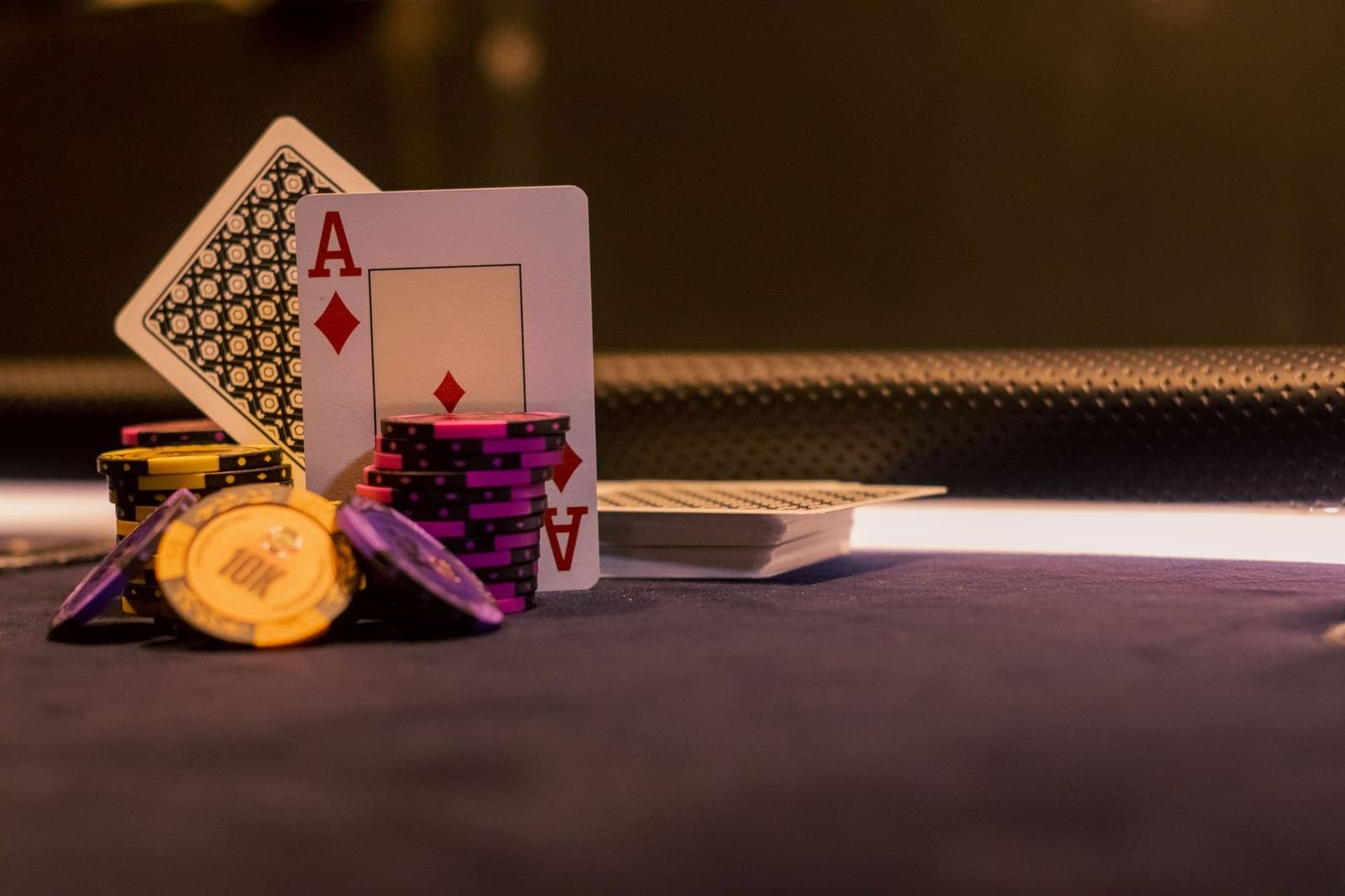
Poker vs blackjack: which game rewards skill more?
Blackjack pits the player against the house under fixed rules. Poker pits players against each other, so skill plays out against people rather than the casino.
Blackjack and poker are the two card games most often discussed when people ask whether skill matters. Both use a standard deck, both involve decisions, and both are offered in casinos. The structure underneath is different, and that difference decides how much a player's choices can change the result.
In short, poker gives skill more room to matter, because its decisions involve betting, reading opponents and managing incomplete information. Blackjack has well-documented best plays for each hand, so skill there mostly means applying a known method correctly. The sections below compare the two on four points.
Who you are playing against
In blackjack, you play against the dealer, who follows fixed rules such as drawing to 16 and standing on 17. The house sets the odds, and the player's task is to respond well to the cards dealt. There are no other players to outplay.
In poker, the contest is between players. A skilled player tries to win chips from others by judging betting patterns, estimating the range of hands an opponent may hold and adjusting to the table. The rules fix how hands rank, but not how any single decision turns out.
On this criterion, poker favours skill more, because the opponents are not fixed rules and their behaviour can be studied and exploited over time.
The house edge and the rake
Blackjack carries a house edge that depends on the rules: the number of decks, whether the dealer stands or hits on soft 17, and whether doubling after a split is allowed. Basic strategy, a published chart of the best decision for each hand, reduces that edge to a figure often cited near 0.5 per cent under common rules. Players who deviate from the chart give up part of that improvement. Our guide to basic strategy explained in plain English sets out how the chart works.
Poker has no house edge in the same sense, because the casino is not a party to the pot. Venues usually charge a rake, a share of each pot that is often capped, or a fixed time fee in some formats. These charges apply regardless of skill, so the house earns from the volume of play rather than from any one outcome.
On this criterion, blackjack is the clearer case for skill, since correct decisions can measurably narrow a known gap against the house. In poker, skill works against other players rather than the casino.
At a glance
- Opponents: the dealer and fixed rules in blackjack, other players in poker
- Casino take: a built-in house edge in blackjack, a rake or time fee in poker
- Decisions: a few per hand in blackjack, many across betting rounds in poker
- Information: fully visible rules in blackjack, hidden cards and opponents in poker
- Variance: high in both games, with large swings over short sessions
How decisions and luck shape each game
Blackjack hands are short, and each involves a small set of options: hit, stand, double, split and, where allowed, surrender. Strategy charts cover nearly every situation, so the decisions are repeatable. A correct play can still lose a hand, which is why the edge becomes visible only over very large numbers of hands.
Poker hands last longer and involve many decisions, made with hidden cards and with opponents' actions still unfolding. No single chart settles most situations, so judgement carries more weight. Luck still plays a large role, and a skilled player can lose a session to a run of poor cards.
On this criterion, poker gives skill more scope, because its decisions are less fixed. Blackjack's skill is easier to measure, but it is also narrower.
The verdict
Poker rewards skill more in the sense that decisions and opponents give it more room to operate. Blackjack rewards a narrower, well-documented skill, mostly learning basic strategy, which measurably reduces the house edge under common rules. The better answer depends on what skill means to you.
Neither game is a reliable way to earn money for most people, and the result of any session stays uncertain. The glossary explains terms such as rake, variance and house edge. Anyone who finds gambling hard to control can find support through the responsible gambling page.
Frequently asked questions
Is poker more skilful than blackjack?
Poker involves decisions about betting, opponents and hidden cards, so skill has more room to affect results. Blackjack's best plays are documented in charts, so skill mainly means applying them correctly.
Does basic strategy make blackjack a skill game?
Basic strategy reduces the house edge under common rules, but it does not remove the edge or guarantee any result. The exact figure changes with the number of decks and the dealer's rules.
How does a casino earn from poker?
In most poker formats, the venue takes a rake, a share of each pot, or a fixed time fee rather than playing against the players. The exact structure varies by venue and format.
Sources: Wikipedia: Blackjack, Wikipedia: Poker, UK Gambling Commission, Nevada Gaming Control Board, checked and rewritten by the Casino Courant desk. Spotted an error? Tell us.
Casino Courant is independent and does not offer gambling. We do not take payment for editorial coverage. 18+. Gamble responsibly.