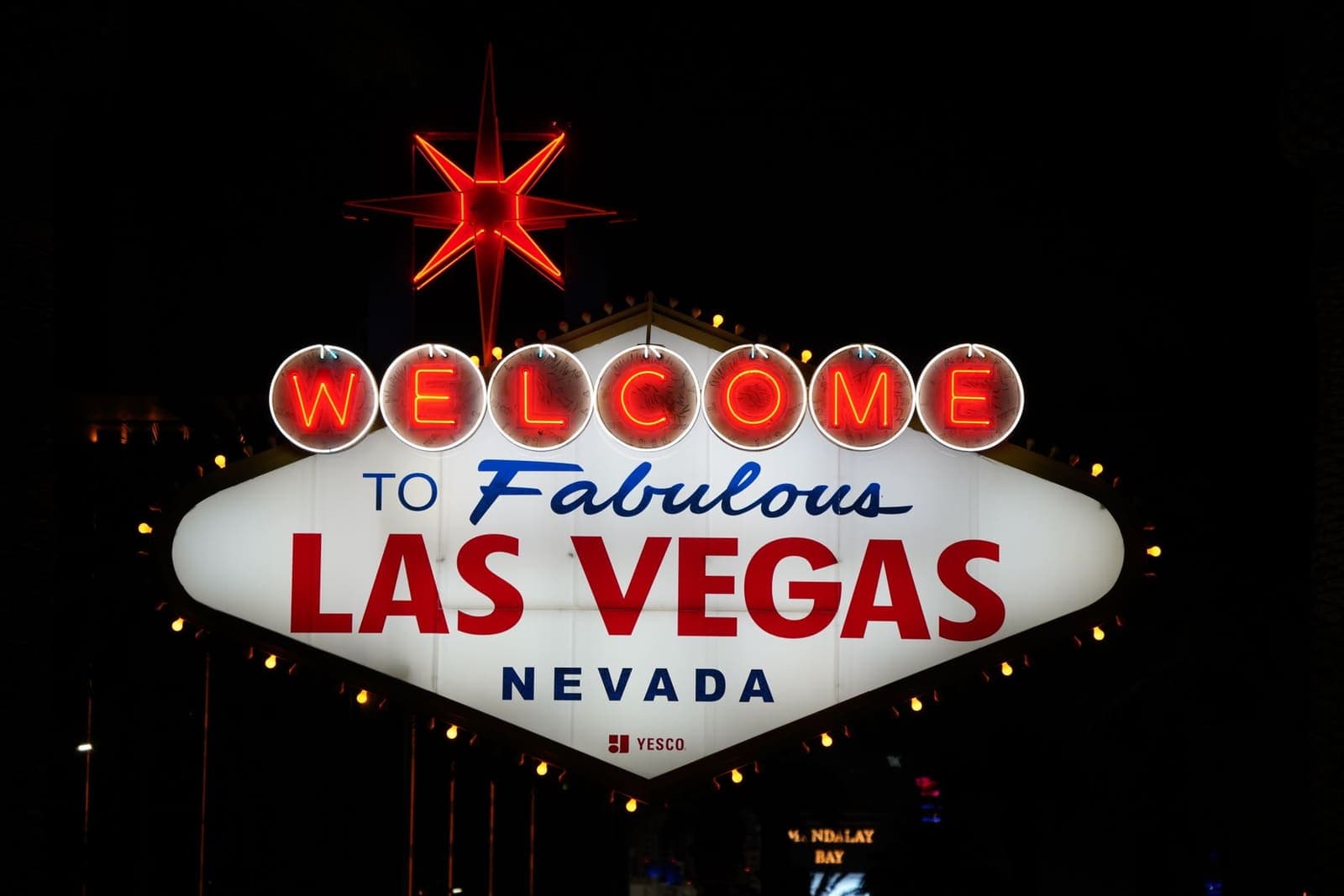
How the Las Vegas Strip grew from desert highway to megaresort corridor
Gambling licences, a 1967 corporate law and the Mirage's 1989 opening reshaped a dusty highway into the resort strip visitors know today.
The Las Vegas Strip grew from a desert highway lined with motels into a corridor of large resorts through a sequence of legal, financial and design changes. Nevada legalised casino gambling in 1931, and the first big hotels followed in the 1940s on the highway that linked Las Vegas with Los Angeles. Later decades brought corporate owners, themed megaresorts and a business that now depends as much on rooms, food and entertainment as on the casino floor.
El Rancho Vegas and the first hotels on the highway
Land just beyond the town limits offered space for large lots and car parking, which suited motorists arriving by road. The El Rancho Vegas opened in 1941 with a casino and is often cited as the first resort on what became the Strip, with the Last Frontier following in 1942.
The Flamingo opened in December 1946 and is closely associated with the gangster Bugsy Siegel, who had backed its construction. The hotel's opening was troubled, and Siegel was shot dead in 1947, months after the Flamingo had opened.
Nevada's 1931 gambling law and the mob-era Strip
Nevada legalised casino gambling in 1931, the same year work began on Hoover Dam, and gaming taxes became an important source of state income in the decades that followed.
Organised crime figures held interests in several early casinos, and the state responded by tightening oversight. The Nevada Gaming Control Board was created in 1955 to investigate applicants and monitor licensed operations, a change that shaped who could own a Strip casino.
The 1967 corporate gaming law that let public companies in
Caesars Palace opened in 1966 with a classical theme that signalled a new kind of hotel, one built around spectacle as well as gambling. Howard Hughes bought several Strip properties in the late 1960s, as investors took a growing interest in the hotels.
The Corporate Gaming Act of 1967 allowed publicly traded companies to hold casino licences. That opened the Strip to stock market capital and to owners who could raise money far beyond a single family or partnership.
- 1931: Nevada legalises casino gambling.
- 1941: El Rancho Vegas opens, often cited as the first resort on the highway.
- 1955: The Nevada Gaming Control Board is created.
- 1966: Caesars Palace opens with a Roman theme.
- 1967: The Corporate Gaming Act allows public companies to hold casino licences.
- 1989: The Mirage opens on the Strip.
- 1993: The MGM Grand opens.
- 1998: The Bellagio opens.
- 2009: CityCenter opens, including the Aria resort.
- 2020: Strip casinos close in March and reopen in June.
- 2023: The Sphere opens.
The Mirage opens in 1989 and the megaresort era begins
The Mirage opened in 1989 under Steve Wynn, with a tropical theme and an artificial volcano that erupted at intervals after dark. It was built as an attraction in its own right, and its success set the template for the megaresorts that followed. For more on the company Wynn later built, see Wynn Resorts history.
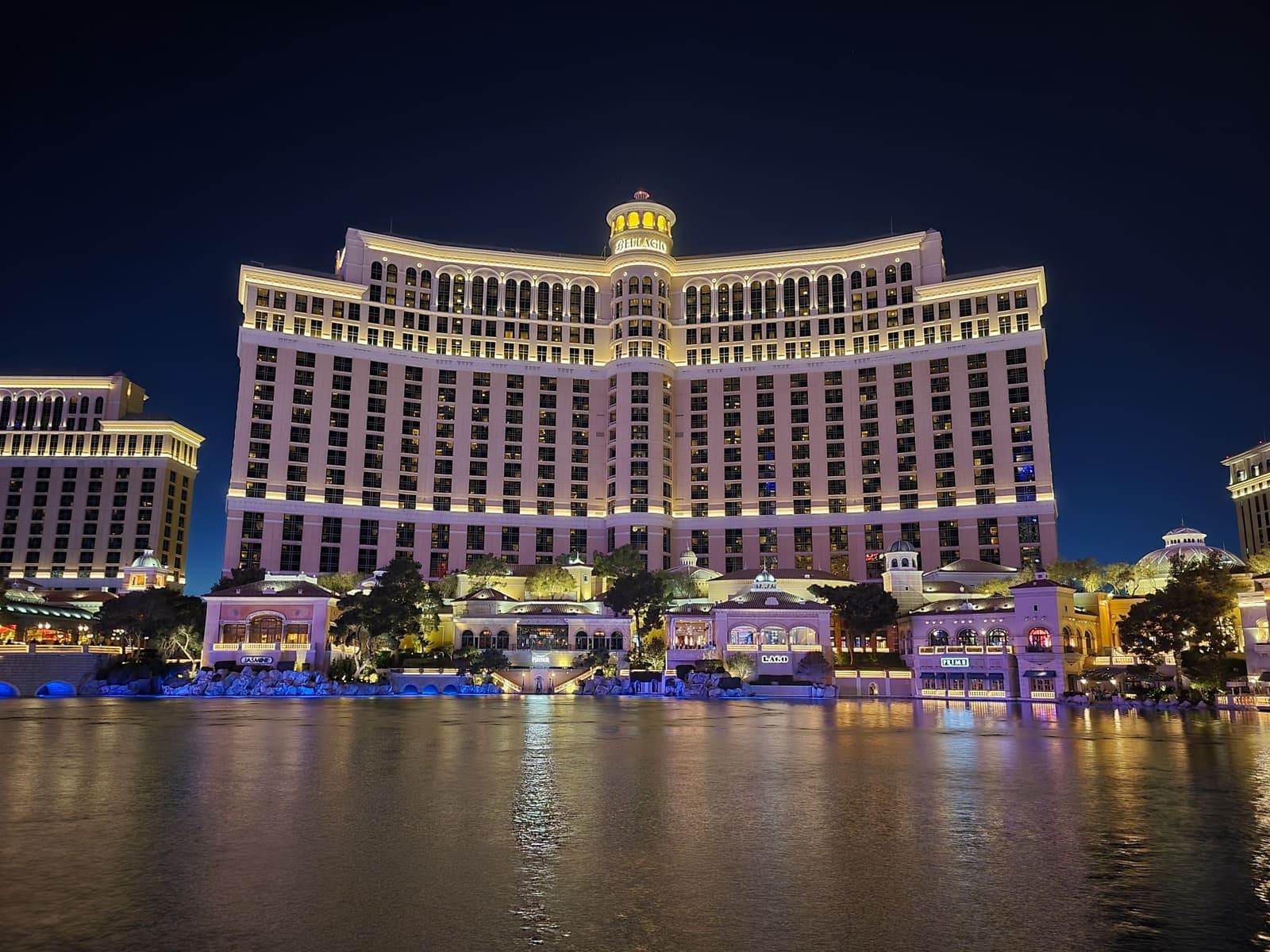
Through the 1990s the Strip added hotels of enormous scale. The MGM Grand opened in 1993 as the largest hotel in the world at that time, and the Bellagio opened in 1998 with a lake and fountain display. The Venetian opened in 1999 on the site of the older Sands hotel, bringing a Venice-style theme and canals to the Strip.
Why hotels, shows and conventions now carry so much of Strip revenue
Casino income is usually measured as gross gaming revenue, the amount wagered minus the winnings paid out, which tracks the casino floor alone. Strip resorts also earn large sums from rooms, restaurants, nightclubs, arena shows and convention business, a mix explained in more detail in what GGR is.
CityCenter opened in late 2009, in the aftermath of the 2008 financial crisis that had halted several Strip projects. The Sphere, which opened in 2023 with a large spherical venue and screen, shows how far the resorts have moved toward entertainment that draws visitors who may not gamble at all.
The 2020 closures and what followed them
The Strip's casinos closed in March 2020 as the coronavirus pandemic spread, and they reopened in June 2020 under state health rules. Before the pandemic, the Las Vegas Convention and Visitors Authority reported more than 40 million visitors in a typical year, which made the wider destination one of the most visited in the United States.
Each era of the Strip brought new owners, new themes and new rules. Readers who want to learn more about gambling harm and the help available can visit the responsible gambling page.
Newcomers often confuse the Strip with Fremont Street, the older casino area in downtown Las Vegas, which has its own history and character.
Markets: MGM stock today
Frequently asked questions
When did the Las Vegas Strip begin?
The Las Vegas Strip took shape in the early 1940s, when El Rancho Vegas opened in 1941 on the highway to Los Angeles. Hotels spread along the road through the 1940s and 1950s, and the name now refers to the resort stretch of Las Vegas Boulevard.
Is the Las Vegas Strip inside the Las Vegas city limits?
Most of the Strip lies in unincorporated Clark County rather than inside the city limits of Las Vegas. That is why it is often described as a separate district from the city's downtown.
When did Nevada legalise casino gambling?
Nevada legalised casino gambling in 1931, the same year work began on Hoover Dam. The state later created the Nevada Gaming Control Board in 1955 to oversee licensing and monitor operators.
What was the Mirage and why is it important?
The Mirage opened on the Strip in 1989 under Steve Wynn, with a tropical theme and an artificial volcano. It is widely regarded as the start of the modern themed megaresort era, which led to hotels such as the Bellagio in 1998.
How old do you have to be to gamble on the Las Vegas Strip?
The minimum gambling age on the Las Vegas Strip is 21, the same as across Nevada. Other US states and countries set their own minimum ages, and the rules differ widely.
What is the difference between the Strip and Fremont Street?
The Strip is a stretch of Las Vegas Boulevard, mostly in unincorporated Clark County, lined with large resorts. Fremont Street is an older casino district in downtown Las Vegas with its own history.
How many visitors did Las Vegas draw before the pandemic?
The Las Vegas Convention and Visitors Authority reported more than 40 million visitors to the wider Las Vegas area in a typical pre-pandemic year. Those figures cover the whole destination, not the Strip alone.
Why do Strip resorts earn so much from non-gaming revenue?
Strip resorts earn from rooms, restaurants, shows, nightlife and conventions, which are grouped together as non-gaming revenue. This mix lets resorts attract visitors who spend without gambling, and it has shaped how the megaresorts are designed.
Sources: Nevada Gaming Control Board, Las Vegas Convention and Visitors Authority, Encyclopaedia Britannica: Las Vegas, checked and rewritten by the Casino Courant desk. Spotted an error? Tell us.
More on United States, Las Vegas
Casino Courant is independent and does not offer gambling. We do not take payment for editorial coverage. 18+. Gamble responsibly.