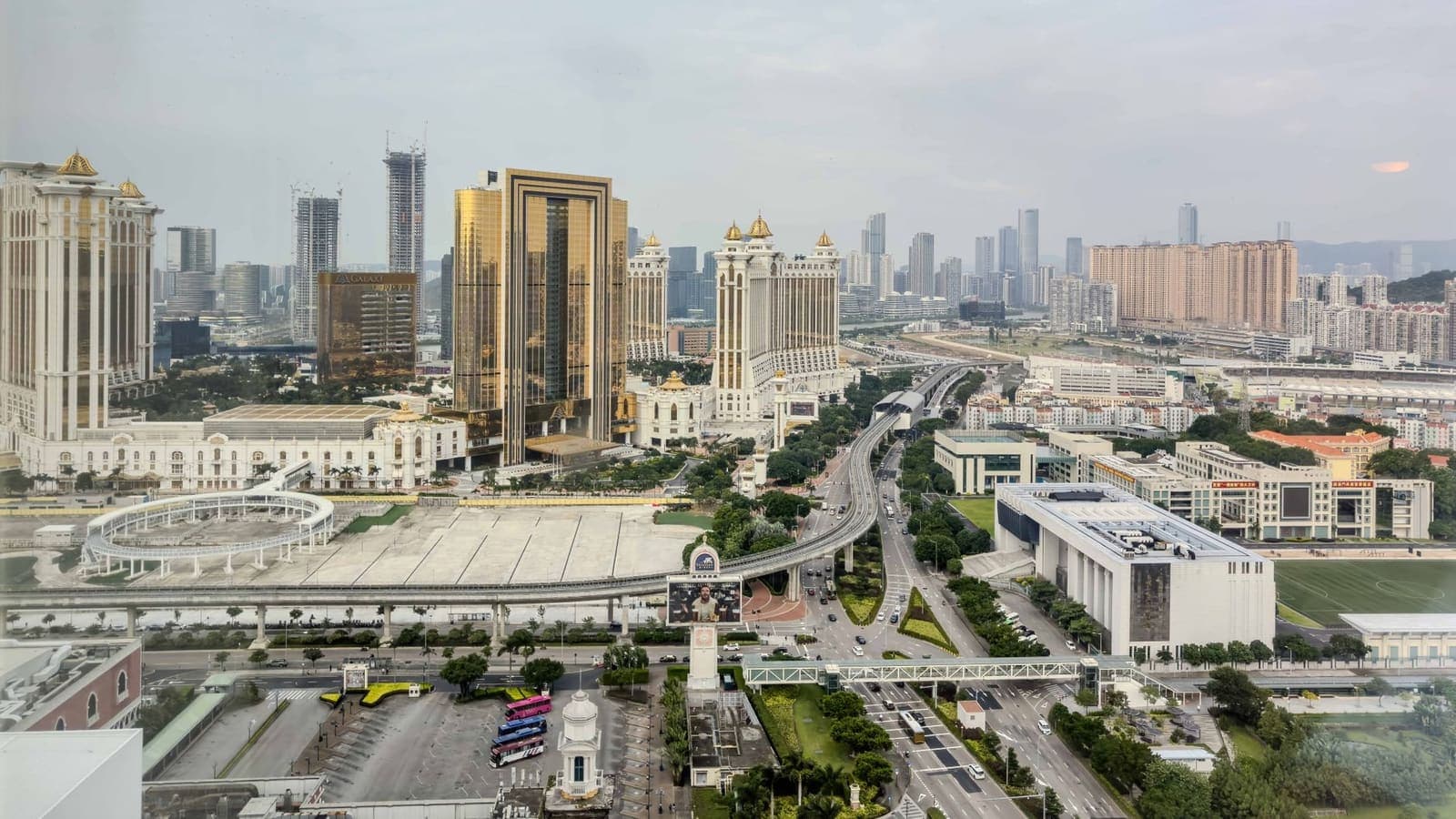
How Macau's casino industry works, from monopoly to mass market
Macau is the world's largest gambling market by revenue, and its casinos run under a government licensing system that ties the industry closely to mainland China.
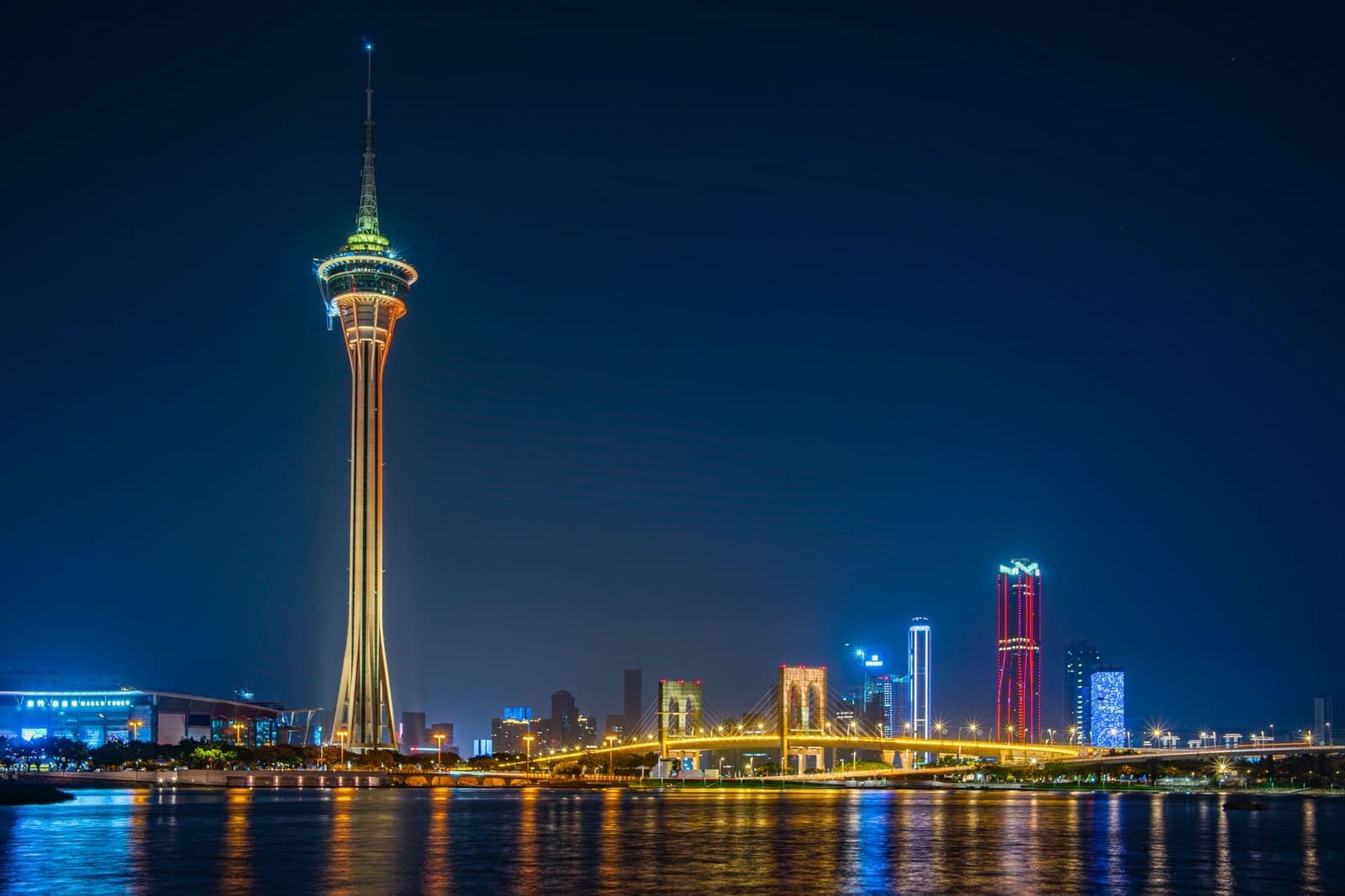
Macau's casino industry is a licensed market in which six operators run casinos under government concessions. Most of their revenue comes from visitors from mainland China, who play in mass-market gaming halls and in VIP rooms. The government sets the rules and takes a large share of the takings, which means the sector's fortunes depend heavily on tax policy, travel patterns and events beyond the city's borders.
The industry's key measure is gross gaming revenue (GGR), which is the total amount wagered minus the winnings paid back to players. It is not the same as cash handled, because money paid out in prizes is excluded. Macau reports GGR every month, and analysts and investors use it to compare operators and years.
A monopoly that became a multi-operator market
Gambling has a long history in Macau, which was a Portuguese territory until its handover to China in December 1999. From 1962, a single company, the Sociedade de Turismo e Diversões de Macau, held the exclusive right to run casinos in the city. Its chairman, Stanley Ho, became the best-known figure in the territory's gambling history.
In 2002 the government ended the monopoly and awarded concessions and sub-concessions to several operators, including international groups. That opened the market to competition and brought in foreign capital. It also led to a wave of large integrated resorts on Cotai, the reclaimed land between the islands of Taipa and Coloane. The government has said the current concessions run until 2032.
How the money is made
Casinos earn their margin from the house edge, the built-in mathematical advantage that applies to each game over many bets. Any individual player can win in a single session, but across millions of bets the casino's share becomes predictable. That is why operators plan around volume and average margin rather than individual outcomes.
The government takes a large share of that revenue. Macau applies a gaming tax of 35 per cent of GGR, and operators make further contributions to public funds. After tax, operators pay for staff, property, marketing and the commissions they pay to intermediaries. What remains is profit. Because the tax is levied on revenue rather than profit, the state collects a steady share even in years when operators earn less.
Mass market, VIP rooms and junkets
The industry has two main segments. The mass market covers slot machines and table games played with comparatively modest stakes, and it draws large numbers of day visitors and weekend tourists. VIP gaming involves a smaller number of high-stakes players, usually housed in dedicated rooms. Historically, VIP play has produced a large share of Macau's revenue, although that share has moved up and down with policy and economic conditions.
Junkets are intermediaries that recruit VIP players, often arrange travel and accommodation, and in some cases extend credit. They earn commissions linked to the amount their players bet or lose. The regulator has tightened junket rules over time, and junket operators must now be licensed. Loyalty points and complimentary rooms, meals and travel are explained in Casino comps explained.
The rules that shape a visit
The Gaming Inspection and Coordination Bureau, known by its Portuguese acronym DICJ, regulates the sector. It supervises the concessionaires, licenses junket operators and publishes monthly statistics on gross gaming revenue and visitor numbers. Operators must also follow rules on advertising, age limits and anti-money laundering controls.
- The minimum age to enter a casino in Macau is 21.
- The local currency is the pataca (MOP), which is pegged to the Hong Kong dollar (HK$), and Hong Kong dollars are often accepted in casinos.
- Visitors from mainland China are subject to China's currency and capital controls, which limit how much money can be taken out of the country.
- The government collects gaming tax at 35 per cent of gross gaming revenue.
Why mainland China drives the market
Most of Macau's casino customers come from mainland China, so the city's revenue tracks Chinese travel policy, the health of the economy and the state of cross-border connections. Visitors arrive by ferry, by road and by air. The Hong Kong-Zhuhai-Macau Bridge, which opened in 2018, added a road link to the wider Pearl River Delta and made day trips easier.
The market has also shown how exposed it is to outside shocks. Border closures during the Covid-19 pandemic cut visitor numbers sharply. A national anti-corruption campaign in mainland China from 2012 onward reduced the flow of high-stakes VIP play. Operators responded by diversifying into hotels, conventions, retail and entertainment, and by promoting leisure visitors to the mass market.
What to watch when reading the numbers
Monthly GGR figures can look dramatic, but they cover a short period and reflect holiday timing, visitor flows and policy changes. Readers should compare figures year on year and, where it is published, look at the split between mass and VIP play. Macau figures are reported in patacas, so comparisons with other markets need care, because exchange rates change the picture. For players, the central point is that the house edge favours the operator over time. Anyone who wants help setting limits can find details on safer gambling and help lines.
Frequently asked questions
What is gross gaming revenue in Macau?
Gross gaming revenue, or GGR, is the total amount wagered minus the winnings paid back to players. The government publishes it monthly, and it is the main measure of the market's size. It is not the same as the total cash that changes hands in casinos.
Who runs the casinos in Macau?
Six operators hold concessions or sub-concessions to run casinos. The system replaced a single-operator monopoly in 2002, when the government opened the market to several companies.
What is a junket operator?
A junket operator is an intermediary that recruits VIP players, often arranges their travel and accommodation, and sometimes extends credit. Junket operators earn commissions linked to the amounts their players bet or lose. They must be licensed by the regulator.
What is the minimum age for casinos in Macau?
The minimum age to enter a casino in Macau is 21. Age rules differ from one jurisdiction to another, so readers should check the local rules wherever they are.
Sources: Gaming Inspection and Coordination Bureau (DICJ), Macao SAR, Government of the Macao Special Administrative Region, Encyclopaedia Britannica, Macau, checked and rewritten by the Casino Courant desk. Spotted an error? Tell us.
More on Macau
Casino Courant is independent and does not offer gambling. We do not take payment for editorial coverage. 18+. Gamble responsibly.